On our roadmap
The answer changed the detail. The crew built the old drawing.
A project runs through owners, architects, contractors and suppliers. Spurby keeps each work package’s record from the calls, emails and site chats where details change.

Where a changed detail goes missing.
Design
Architect, owner
Drawings
Architect, site team
Site query
Main contractor
Lost here
Submittal
Supplier
Procurement
Supplier, subcontractor
Install
Site team
Handover
Contractor, owner
Six ways a project loses a decision.
Each one starts on a site walk, a call or a chat, and ends in rework or a lost claim.
Rev C is out. The fabricator is cutting Rev B.
The structural consultant issues Rev C of the rebar drawings, and the PMC posts “Rev C is out” on WhatsApp. The fabricator isn’t on the document platform, and keeps cutting to the Rev B someone emailed.
Steel tied wrong, a pour delayed, and rework someone has to pay for.
DrawingsLevel 6 slab, rebar
Rev CExtra top bars at the core
- Site engineerRev CUp to date
- Rebar fabricatorRev BNot the latest
- Formwork subcontractorRev CUp to date
Sent Rev C to the fabricator’s detailer, and flagged Friday’s pour inspection.
Knows the current revision for every work package, catches a bar schedule cut to an old one, and tells the site engineer and the fabricator before the pour.
Your team decides: Whether to hold the pour.
The answer is in a WhatsApp photo. The RFI is still open.
The MEP consultant answers a duct and beam clash on a site visit, and a sketch goes on WhatsApp. The RFI log still says open, and a second gang installs to the original drawing.
Idle gangs, ducts taken down, and a delay claim to argue over.
On projects in Asia, about a third of RFIs never got a reply at all.
Matches the informal answer to the open RFI, tells every gang it affects, and asks the consultant to close it on the log.
Your team decides: Whether the answer stands, and what it does to time and cost.
Extra work agreed on a walk never becomes a variation.
On a site walk, the developer’s representative asks for a partition to move, and the architect messages “go ahead, rates later.” It’s built and billed, and the QS rejects it as in scope.
Unpaid work, and a running account bill held in dispute.
Owner-directed changes are the second most common cause of construction disputes in the US.
VariationsTower B, level 5 instructions
Item Site chat Variations RA bill 7 Partition moved, flat 502 Approved, 14 Oct Not raised (doesn’t match) ₹2.4 L billed Two openings, core wall Approved, 21 Oct VO 18 ₹0.9 L billed Stone skirting, lobby “Rates later,” 28 Oct Not raised (doesn’t match) Not billed Drafted variation requests for flat 502 and the skirting, with the messages attached.
Turns each instruction into a record of who asked, where and when, and checks it against the variation register before it’s billed.
Your team decides: Whether to raise the variation, and at what rate.
The notice window closed in a chat commercial never reads.
The client hands over floor 9 three weeks late, and the site team talks about it in the group on 3 Sep. Commercial hears on 20 Oct, after the contract’s 28 days have run out.
Time and money the contract would have given you, lost to a missed notice.
Under FIDIC’s 2017 contracts, a claim not notified within 28 days of becoming aware of it can be lost entirely.
NoticesTower B, floor 9 access
Floor 9 handed over 21 days late
- “Floor 9 still not released by the client.”
- Gang moved to level 7. No work possible on 9.
- Not told. No notice drafted.
Notice of claim due1 Oct, 7 days left
Drafted the notice for the contracts manager, with the chat, the diary and the photos attached.
Spots events that can trigger a notice in diaries, chats and calls, records when the team knew, and counts down the contract’s period.
Your team decides: Whether to serve notice, and on what basis.
Approved as noted. Ordered as first submitted.
The architect returns the facade bracket submittal “approved as noted,” with comments, by email. Procurement orders from the original data sheet, and it’s found after two floors are fixed.
Rejected deliveries, rework on fixed panels, and a long-lead reorder.
SubmittalsFacade brackets, PO 3318
Item Approved, as noted Ordered Check Bracket finish Stainless, A4 Galvanised Differs Anchor M12 chemical M12 chemical Matches Spacing 600 mm 600 mm Matches Thermal pad Required Not listed Missing Flagged PO 3318 to procurement and the technical office before dispatch.
Compares what was approved, comments and all, with what’s ordered and delivered, and flags the difference before anything is fixed.
Your team decides: Accept a substitute, or reorder.
“Tomorrow,” three days running. The lookahead still says Friday.
A fit-out subcontractor promises conduit by Friday, then says “tomorrow” in the chat three days running. The lookahead never moves, and the next trade arrives to an area that isn’t ready.
Standing time, trades stacked on each other, and a delay that spreads.
Before better planning, crews finished only about half the tasks they planned each week.
ProgrammeLevel 4, fit-out
Subcontractor in the site group, Wed: “Conduit tomorrow.”
- Conduit complete
Fri 8 NovWed 13 Nov+5 days - Ceiling boards
Mon 11 NovFri 15 Nov+4 days - Ceiling contractor arrivesMon 11 NovArea not ready
Told the planner and the ceiling contractor, and moved the lookahead.
Compares each partner’s promised date with what they last said, moves the lookahead, and tells the next trade before it mobilises.
Your team decides: How to re-sequence the work.
- Conduit complete
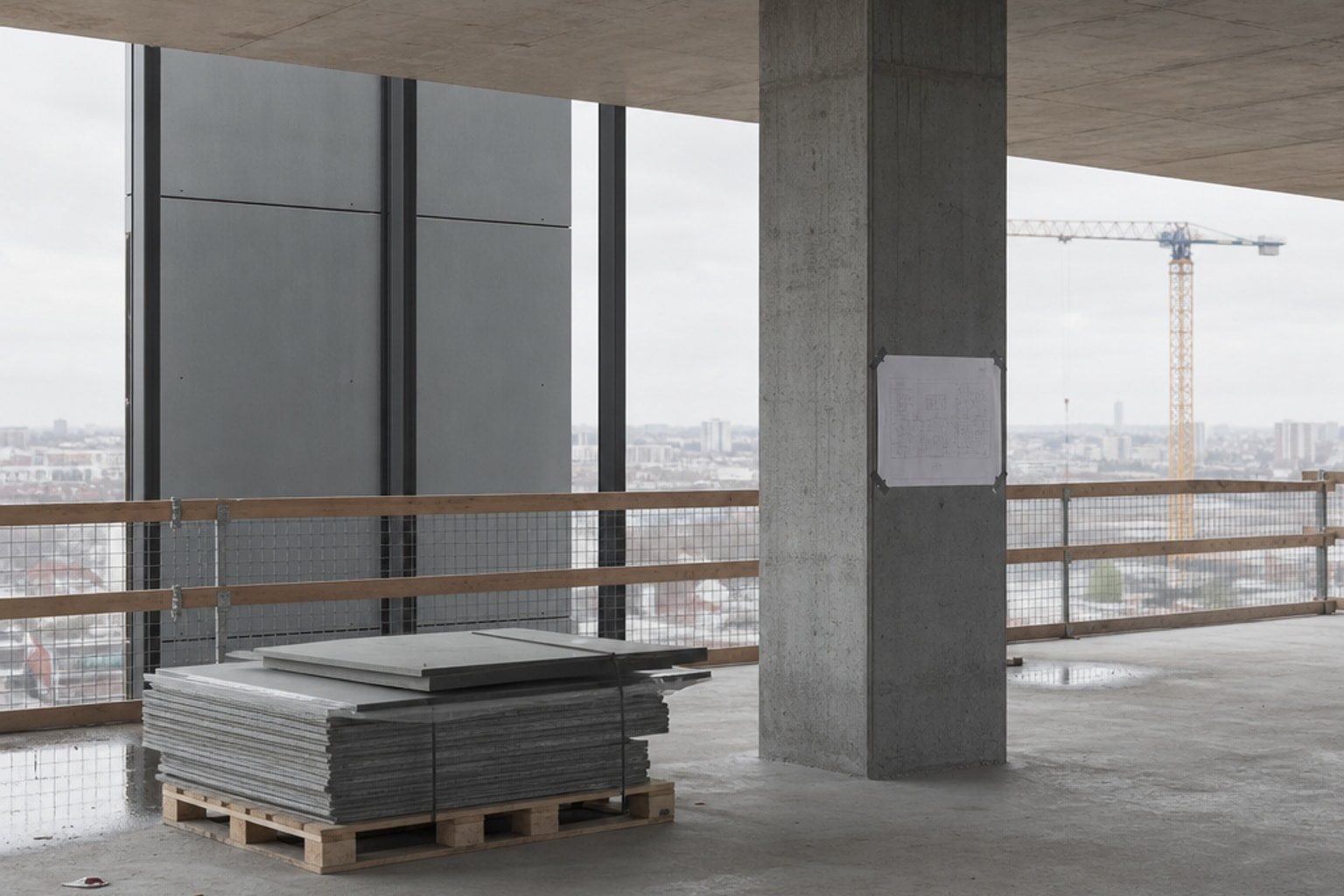
What miscommunication costs a project.
48%
of US rework, $31.3B a year, comes from poor data and miscommunication.
35%
of construction hours go to looking for data, resolving conflicts and fixing mistakes.
9.7
days was the median time to answer a site query (RFI), across 1,362 projects.
Building with partners? Talk to us.
Construction is on our roadmap. Tell us where details get lost on your projects.